Interactive optical study
One beam,
bent honestly
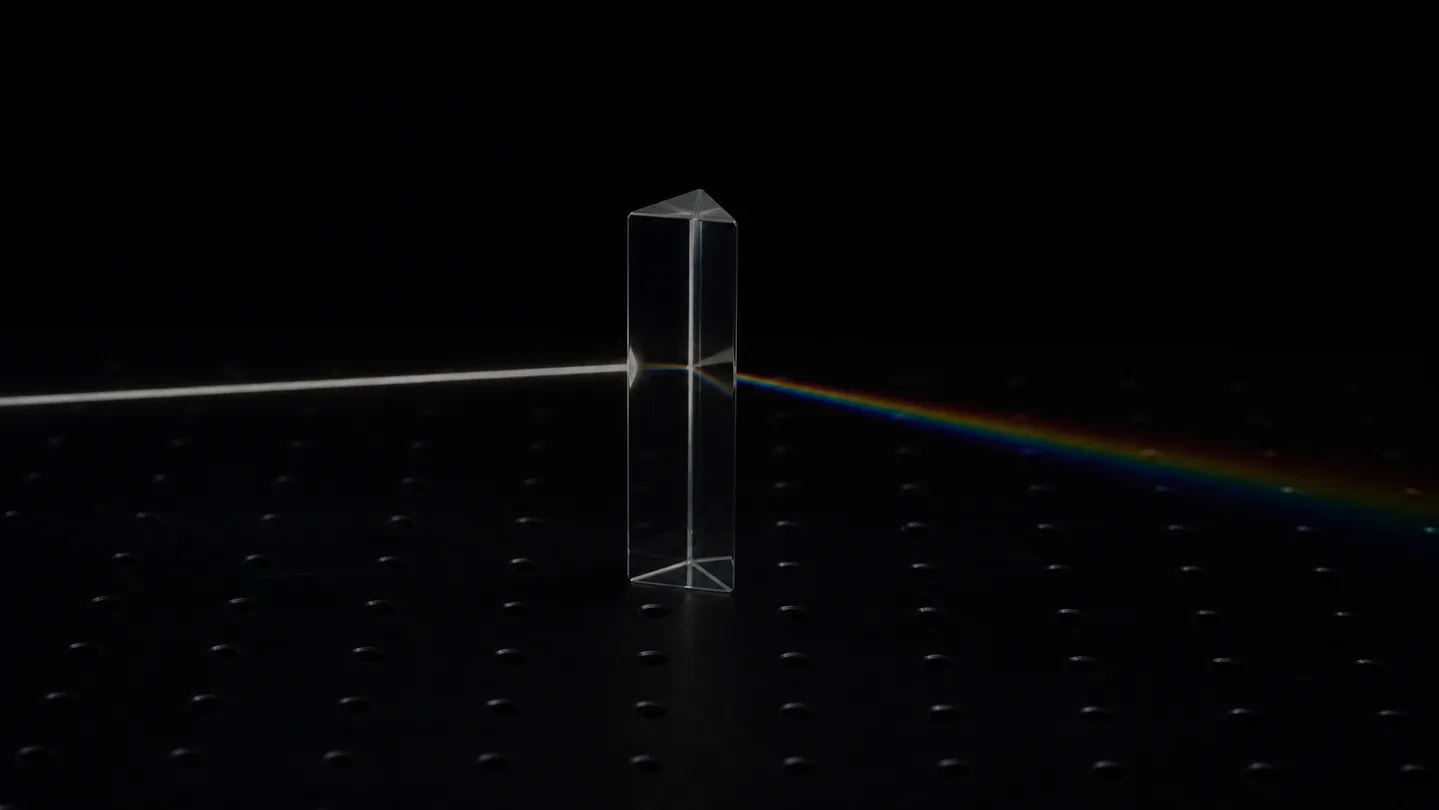
Move the prism to compare how refractive index and dispersion redirect one beam. This view illustrates an optical model; it is not a measured photograph, a product specification, or a lab result.
Glass sets
the light path
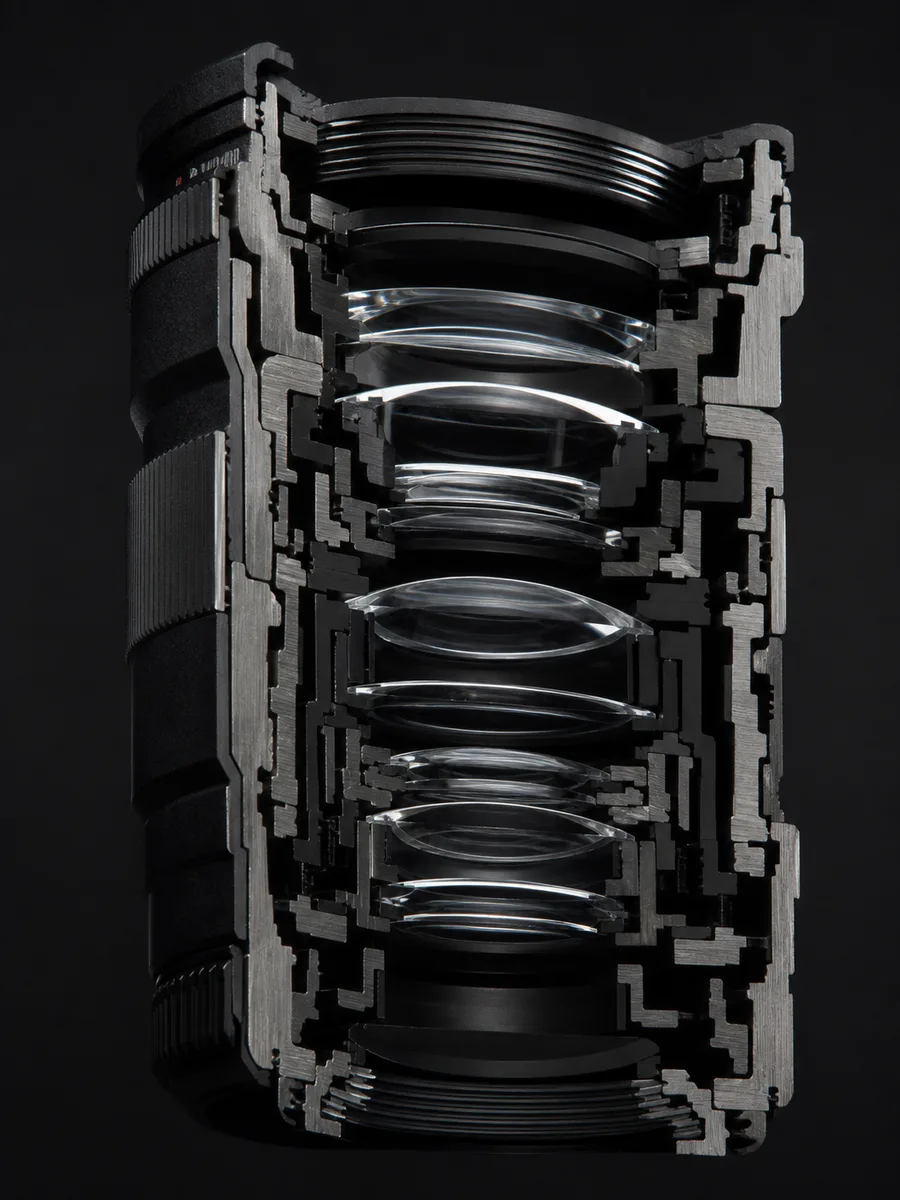
A lens is a chain of refractions: every surface bends the path before an image is made. The L-85 concept uses low-dispersion elements to explain why a design can keep colours from spreading across the frame.
The cutaway is a constructed reference image. Its element count and spacing are illustrative, not a measurement of a commercial lens.
MTF, read with conditions
Contrast transfer at stated line pairs per millimetre gives a clearer comparison than a slogan. These curves illustrate the labels a measured chart needs; they are not optical-bench results.
- 10 lp/mm · sagittal
- 10 lp/mm · meridional
- 30 lp/mm · sagittal
- 30 lp/mm · meridional
Reference specification
| Item | Illustrative value | Condition |
|---|---|---|
| Focal length | 85 mm | concept reference |
| Aperture | f/1.8 – f/16 | concept reference |
| Elements | 7 in 6 | illustrative layout |
| Close focus | 0.62 m | illustrative configuration |
| Filter | Ø 62 mm | illustrative configuration |
| Weight | 438 g | illustrative configuration |
About this study
This is a concept page for reading an optical model. It does not schedule sample loans, measurements, or MTF requests.
Return to the light study